whkdzw027@qq.com
+86 15827230221
+86 027-86861986

High voltage withstand testing of electrical equipment is one of the most important items specified in the "Insulation Preventive Testing" standards. Withstand tests can be divided into AC withstand tests and DC withstand tests. AC withstand tests can further be categorized into power frequency, variable frequency, and 0.1Hz ultra-low frequency testing technologies. Among these, the 0.1Hz ultra-low frequency technology is the latest technique and is recommended by the current International Electrotechnical Commission (IEC).
Response within
24 hours
Free warranty
12 month
On-line training
Support
High voltage withstand testing of electrical equipment is one of the most important items specified in the "Insulation Preventive Testing" standards. Withstand tests can be divided into AC withstand tests and DC withstand tests. AC withstand tests can further be categorized into power frequency, variable frequency, and 0.1Hz ultra-low frequency testing technologies. Among these, the 0.1Hz ultra-low frequency technology is the latest technique and is recommended by the current International Electrotechnical Commission (IEC).
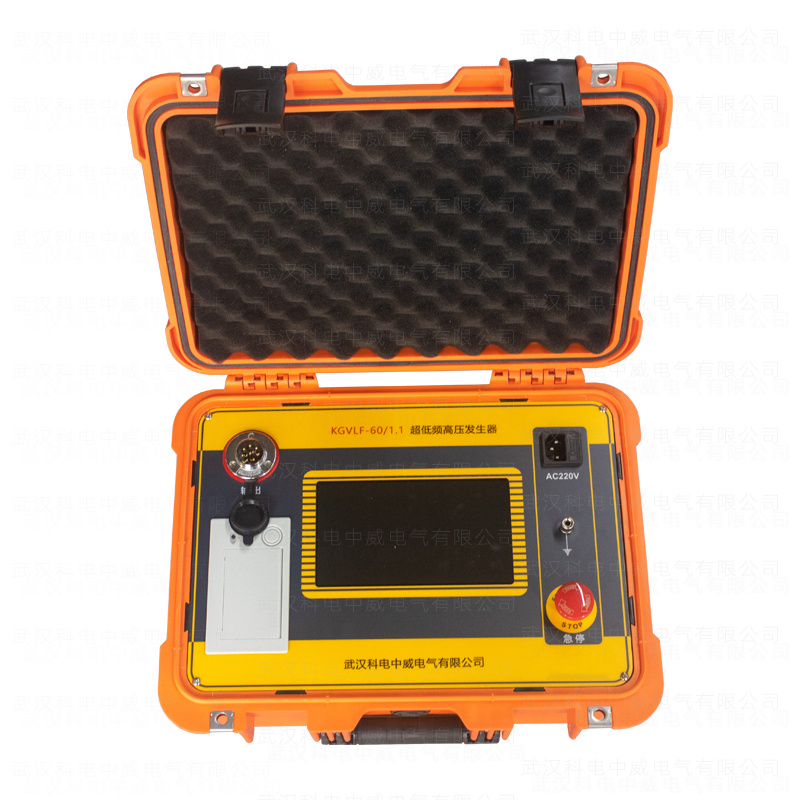
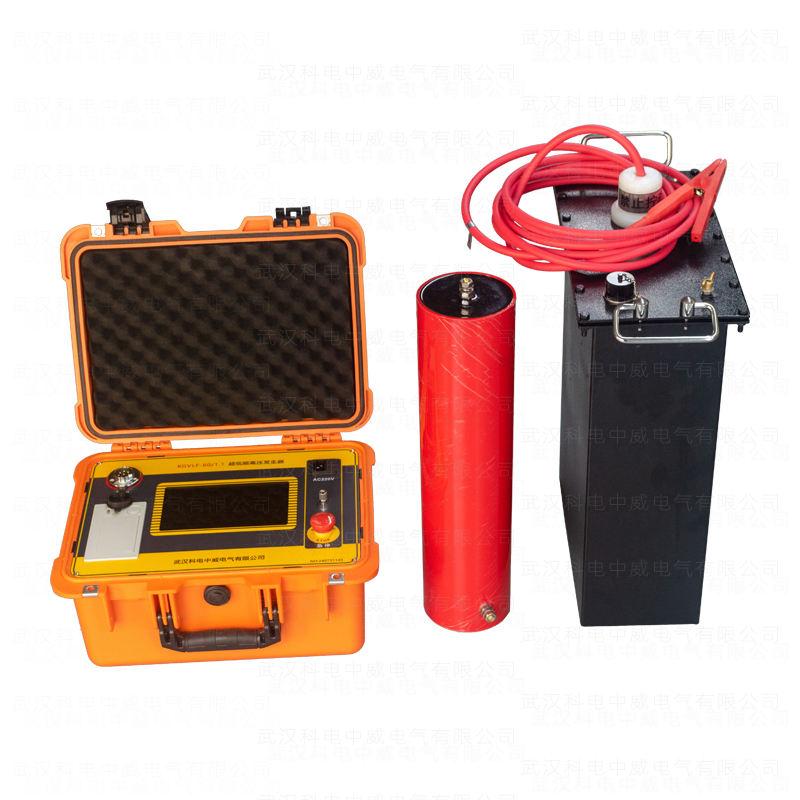
Our company's new generation of ultra-low frequency high voltage generators are core products developed independently using the latest American technology. They feature a 7-inch touchscreen, the latest ARM7 microcontroller, high-speed AD acquisition circuits, and come with backend management software. These generators overcome many shortcomings of similar domestic products and offer a much higher cost-performance ratio compared to imported counterparts. They are especially suitable for the withstand testing of electrical equipment with relatively large equivalent insulation capacitance (such as power cables, power capacitors, large and medium-sized generators, and motors). The product complies with the 2004 newly issued national power industry standard "General Technical Conditions for Ultra-Low Frequency High Voltage Generators DL/T849.4-2004".
Ultra-low frequency insulation withstand testing is actually an alternative method to power frequency withstand testing. When conducting power frequency withstand tests on large and medium-sized generators, motors, power cables, and other specimens with significant capacitance in their insulation layers, large-capacity test transformers or resonant transformers are required. These bulky devices are not only heavy and expensive but also inconvenient to use. To address this issue, the international community has widely adopted the method of reducing the test frequency, thereby decreasing the required capacity of the test power supply. Both theoretical research and practical applications at home and abroad over many years have shown that using 0.1Hz ultra-low frequency withstand testing as a substitute for power frequency testing not only provides equivalent effectiveness but also significantly reduces the size and weight of the equipment. Theoretically, the capacity is about one five-hundredth of that needed for power frequency testing, and it simplifies operation. This is the primary reason why developed countries commonly adopt this method.
In response to the actual conditions of China's power system, the National Development and Reform Commission has formulated the industry standard "Method for Ultra-Low Frequency (0.1Hz) Withstand Testing of 35kV and Below Cross-Linked Polyethylene Insulated Power Cables". In 2004, the power industry standard "General Technical Conditions for Ultra-Low Frequency High Voltage Generators DL/T 849.4-2004" was issued, promoting the adoption of this latest testing method in China.
Although DC withstand testing equipment offers advantages such as compact size, light weight, and lower cost, it poses the greatest risk of damaging the insulation of the tested items. Therefore, the latest regulations related to preventive testing of electrical equipment explicitly prohibit the use of DC high voltage for withstand testing and recommend using AC withstand testing instead.
Our company's newly developed series of 0.1Hz ultra-low frequency high voltage generators utilize the latest power electronics components and ARM7 microcontroller technology, further reducing the size and weight of the equipment while ensuring simpler operation and more stable performance. This new generation of devices overcomes the shortcomings of the first-generation mechanical boosters, which had short lifespans, high failure rates, and large sizes.

1. Output Rated Voltage: Refer to Table 3
2. Output Frequency: 0.1Hz, 0.05Hz, 0.02Hz, 0.01Hz
3. Load Capacity:
0.1Hz maximum 0.5µF
0.05Hz maximum 1.1µF
0.02Hz maximum 2.2µF
0.01Hz maximum 5.5µF
4. Measurement Accuracy: 3%
5. Positive and Negative Peak Voltage Error: ≤3%
6. Voltage Waveform Distortion: ≤5%
7. Operating Conditions: Indoor, outdoor; Temperature: -10℃~+40℃; Humidity: ≤85% RH
8. Power Fuse: Refer to Table 3
9. Power Supply: Voltage 220V±5%, 50±5Hz. Note: If using a portable generator for power supply, the generator's output voltage and frequency must be stable (typically requires power greater than 3kW, frequency 50Hz, voltage 220V±5%)
10. The capacitance of the tested item must not exceed the maximum rated capacitance of the instrument, see the table below for specific values;
| Model | Rated Voltage | Load Capacity | Power Fuse | Product Structure, Weight |
|---|---|---|---|---|
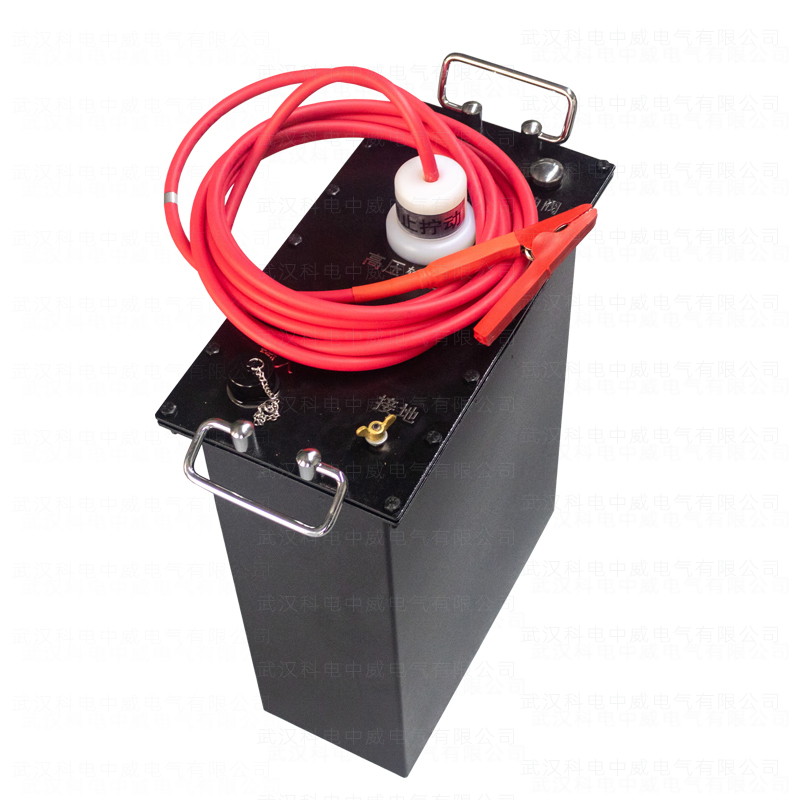
| 60/1.1 | 60kV (peak) | 0.1Hz, ≤0.5µF | 15A | Controller: 4kg Boost Transformer: 50kg |
| 0.05Hz, ≤1.1µF | ||||
| 0.02Hz, ≤2.2µF | ||||
| 0.01Hz, ≤5.5µF |