Currently, there is an increasing trend both internationally and domestically to replace the traditional oil-filled paper-insulated power cables with XLPE (cross-linked polyethylene) insulated power cables. However, due to the large capacity of the cables under test and limitations of testing equipment, DC withstand voltage tests are still commonly used before commissioning cross-linked cables. Recent research by many international and domestic institutions has shown that DC tests can cause varying degrees of damage to XLPE cables. Some research suggests that the structure of XLPE has the ability to store accumulated unipolar residual charges. If these residual charges are not effectively released after a DC test, the combination of these charges with peak AC voltage upon operation could potentially lead to cable breakdown. Domestic research indicates that during DC withstand voltage testing of cross-linked polyethylene cables, the actual electric field strength in the insulation can be up to 11 times higher than the operating electric field strength due to space charge effects. Even if a cross-linked polyethylene cable passes a DC test without breakdown, it can still suffer significant insulation damage. Moreover, since the distribution of the electric field under applied DC voltage differs from that under operational AC voltage, DC testing cannot accurately simulate the overvoltage conditions experienced by cables in service or effectively identify defects in the cables and their joints or installation techniques.
Therefore, non-DC methods for performing withstand voltage tests on cross-linked cables are gaining attention. Additionally, periodic AC withstand voltage tests are conducted on various large transformers and thermal and hydro generators. These tests require high-capacity equipment, often performed using resonance methods but must be carried out at power frequency or equivalent power frequency conditions. Equivalent power frequency conditions typically use a frequency range of 45-65 Hz, though many testing units require a 30-300 Hz test power supply for AC withstand voltage testing of such equipment. Another type of low-frequency device is the ultra-low frequency (0.1 Hz) withstand voltage tester, which has the disadvantage of difficulty in achieving very high voltages and has not gained widespread acceptance in the industry. Series resonance devices have quickly gained market recognition as they realistically simulate operational voltage application and can rapidly reveal the status of the tested equipment.
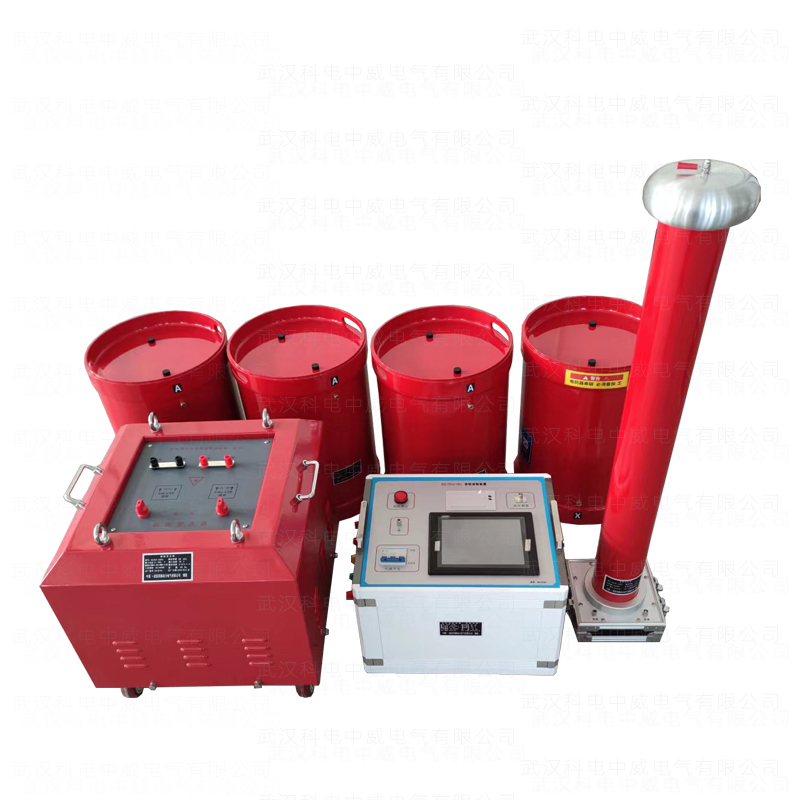
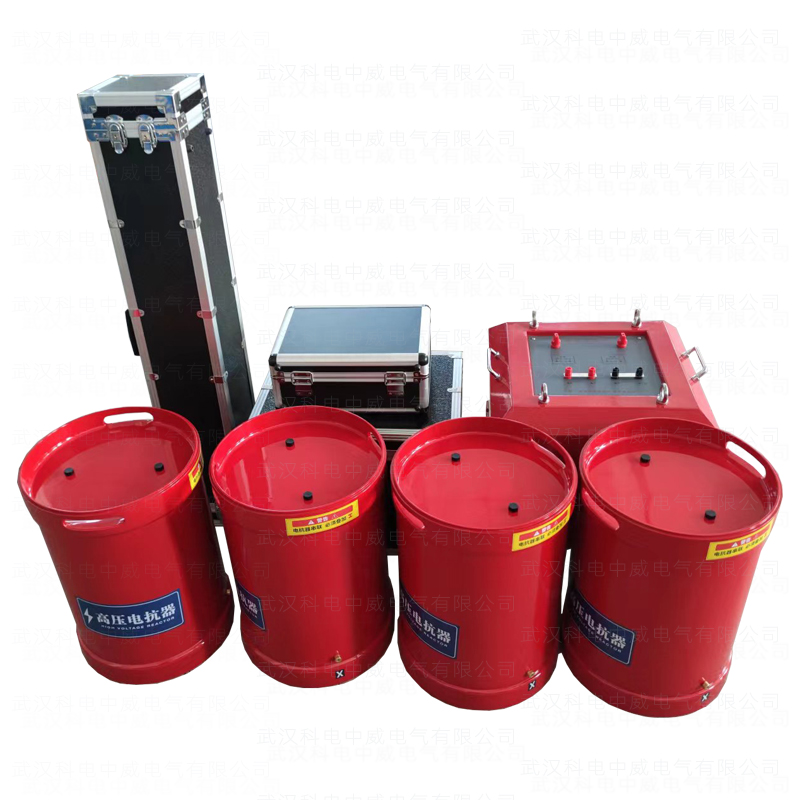
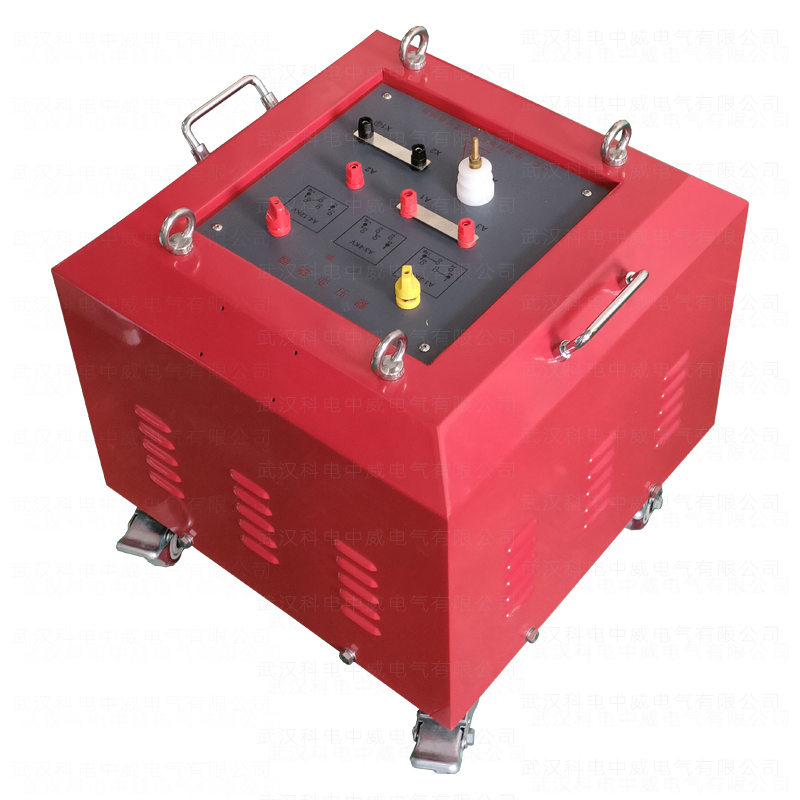
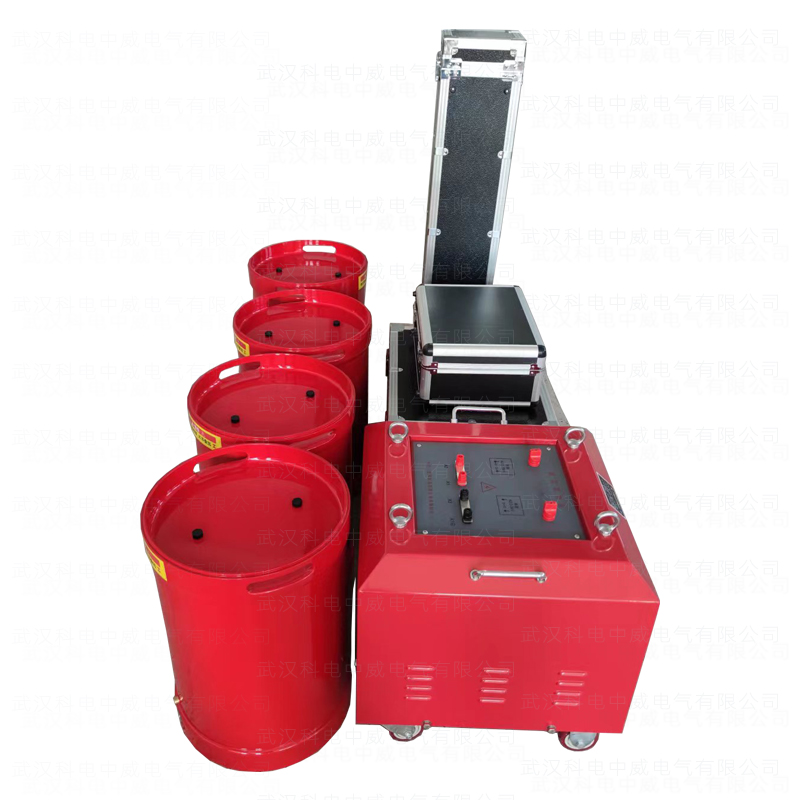
Our company's series of series resonance devices are primarily used for variable frequency AC withstand voltage tests on 10kV, 35kV, 66kV, 110kV, and 220kV cross-linked rubber power cables, 66kV, 110kV, and 220kV gas-insulated switchgear (GIS), and power frequency AC withstand voltage tests on hydro and thermal generators or power transformers. The basic principle involves using adjustable (30-300 Hz) series resonance test equipment to resonate with the capacitance of the item under test to generate an AC test voltage. Given the large capacitance of cables, conventional power frequency test transformers are heavy, bulky, and difficult to obtain large working current power supplies on-site, so series resonance AC withstand voltage test equipment is generally used instead. This significantly reduces the required input power capacity, weight, making them easier to use and transport. Early systems used tunable inductance series resonance devices (50 Hz), but suffered from poor automation levels and high noise. Modern systems mostly use variable frequency resonance, offering higher quality factors (Q values), automatic tuning, multiple protections, reduced noise, flexible combinations, and lightweight components.