whkdzw027@qq.com
+86 15827230221
+86 027-86861986

Transformer equipment is the most critical component in substations, with most electrical devices utilizing insulation structures composed of oil-paper or oil and cardboard. When internal thermal faults, discharge faults, or aging of oil-paper occur, various gases (such as hydrogen, carbon monoxide, carbon dioxide, methane, ethylene, ethane, acetylene, etc.) are produced. These gases dissolve in the oil. Therefore, testing and analyzing transformer oil based on the determination of its gas composition and content is an effective method for power generation and supply companies to judge whether oil-filled electrical equipment operates safely and effectively. It is also a necessary method for manufacturers to inspect their equipment before leaving the factory.
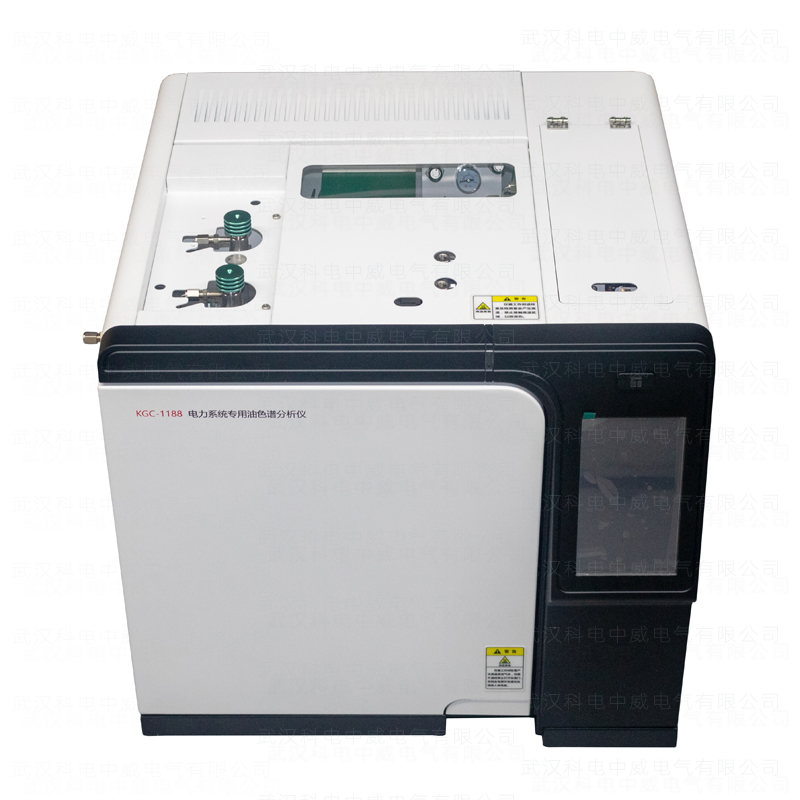
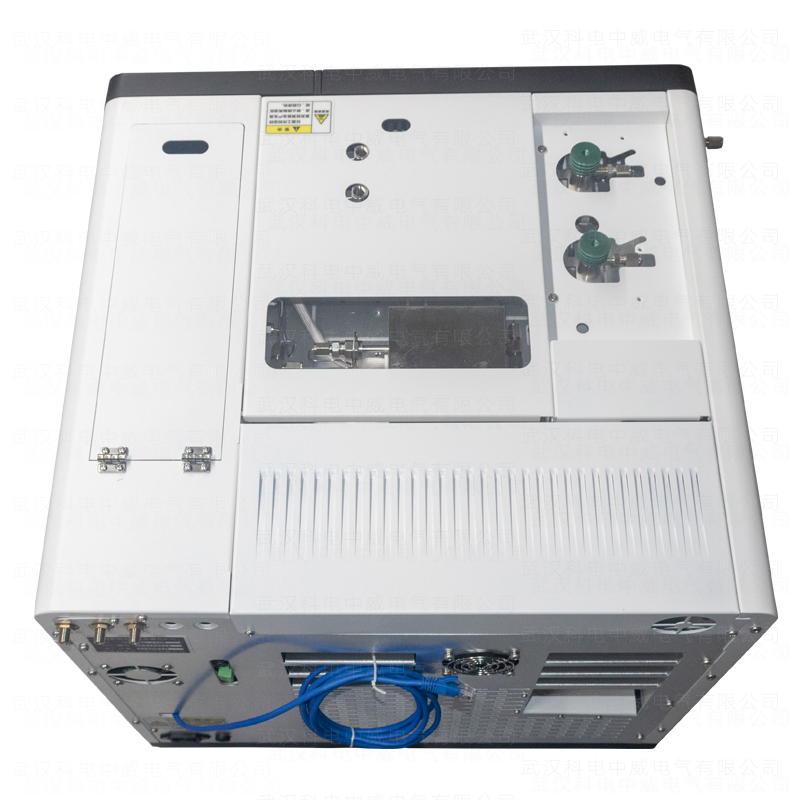
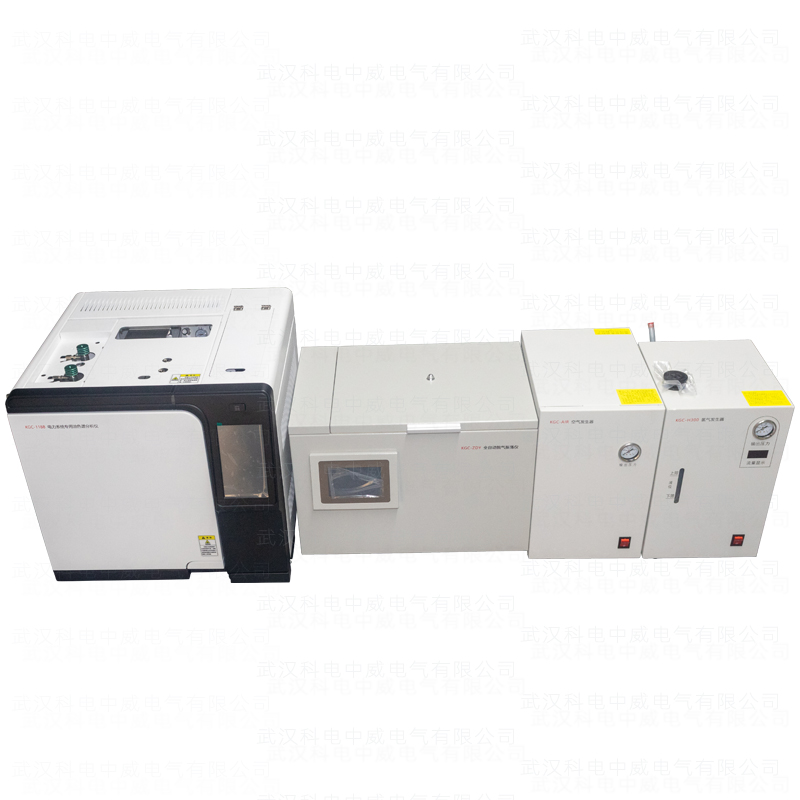
The KGC-1188 Insulating Oil Chromatography Analyzer is suitable for determining the dissolved gas components in insulating oil within power systems. A single injection can complete the full analysis of 7 dissolved gases: H2, CO, CO2, CH4, C2H4, C2H6, C2H2 (hydrogen, carbon monoxide, carbon dioxide, methane, ethylene, ethane, acetylene). The minimum detection concentration for acetylene reaches 0.1 ppm.
Response within
24 hours
Free warranty
12 month
On-line training
Support
Transformer equipment is the most critical component in substations, with most electrical devices utilizing insulation structures composed of oil-paper or oil and cardboard. When internal thermal faults, discharge faults, or aging of oil-paper occur, various gases (such as hydrogen, carbon monoxide, carbon dioxide, methane, ethylene, ethane, acetylene, etc.) are produced. These gases dissolve in the oil. Therefore, testing and analyzing transformer oil based on the determination of its gas composition and content is an effective method for power generation and supply companies to judge whether oil-filled electrical equipment operates safely and effectively. It is also a necessary method for manufacturers to inspect their equipment before leaving the factory.
The KGC-1188 Insulating Oil Chromatography Analyzer is suitable for determining the dissolved gas components in insulating oil within power systems. A single injection can complete the full analysis of 7 dissolved gases: H2, CO, CO2, CH4, C2H4, C2H6, C2H2 (hydrogen, carbon monoxide, carbon dioxide, methane, ethylene, ethane, acetylene). The minimum detection concentration for acetylene reaches 0.1 ppm.
Main Detection: H2, CO, CO2, CH4, C2H4, C2H6, C2H2 serve as primary criteria for fault judgment. It is recommended to detect O2 and N2 as auxiliary criteria (totaling 9 gases).

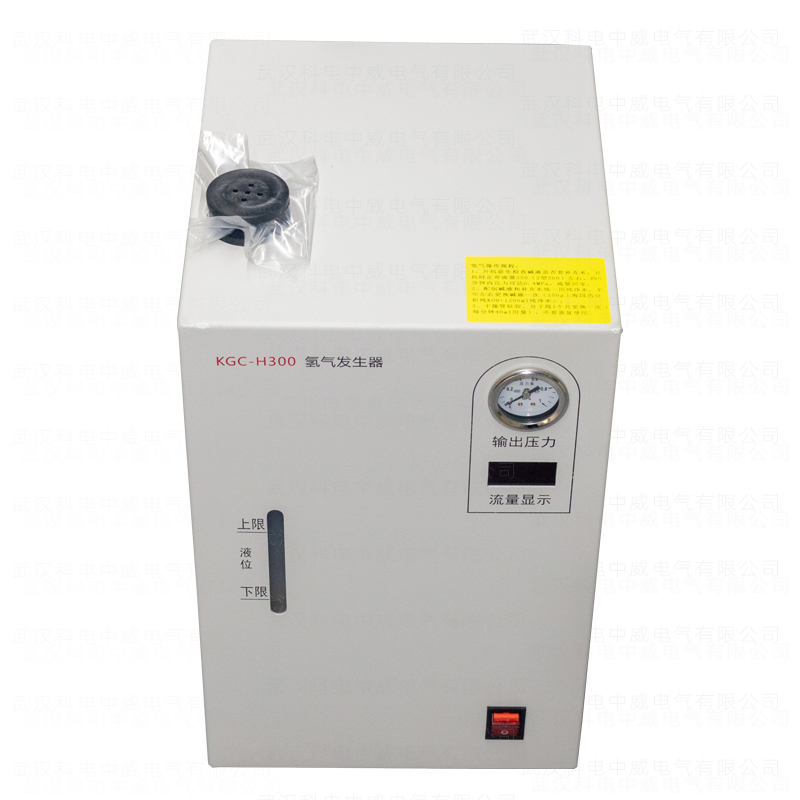
Built-in Back Control Technology for Intuitive Display of Gas Path Pressure: All gas path pressures in the KGC-1188 are digitally displayed via pressure sensors. Through the workstation, users can directly read the pressures of carrier gas, hydrogen, and air, allowing real-time monitoring of analysis conditions.
Back Control Technology for Temperature Settings and Displays: All temperature parameters in the KGC-1188 are digitally displayed. Users can directly read and control temperatures of components such as the column oven, detector, and converter furnace through the workstation, making operations simple and clear.
Back Control Technology for One-Button Startup: Operations such as heating and cooling in the KGC-1188 can be achieved through touchscreen clicks, eliminating the cumbersome operations previously required in laboratory chromatography, essentially achieving one-button startup.
Computer Back Control for Ignition and Current Settings: The KGC-1188 is equipped with an automatic gas path control device. During computer ignition operation, it automatically releases a portion of air to achieve an optimal ignition ratio between hydrogen and air, then restores this ratio after successful ignition. Similarly, settings for thermal conductivity bridge current can be completed through the bridge current setting window in the workstation software.
Digital FID Electronic Zero Adjustment Technology to Enhance Anti-interference Capability: The FID detector signal zero adjustment in the KGC-1188 uses electronic zero adjustment technology. High-precision digital circuits are used for baseline compensation of the FID, enabling electronic regulation of the FID output signal level. This method enhances noise suppression capabilities by installing electronic adjustments directly on the signal channel circuit board, avoiding interference signals from mechanical potentiometers and reducing parasitic parameters, thus providing strong anti-interference capability.
Thermal Conductivity Tungsten Wire Break Protection Function: The KGC-1188 features intelligent thermal conductivity break protection. When the carrier gas pressure falls below a safe threshold, the system automatically cuts off the thermal conductivity current to protect the thermal conductivity detector from damage.
Detector Technical Specifications:
Thermal Conductivity Detector (TCD):
Temperature Control Specifications:
| Controlled Part | Control Range | Control Precision |
|---|---|---|
| Column Oven | Room temperature +4~450℃ | ±0.1℃ |
| Packed Column Injector | Room temperature +4~450℃ | ±0.1℃ |
| Hydrogen Flame (FID) Detector | Room temperature +4~450℃ | ±0.1℃ |
| Thermal Conductivity (TCD) Detector | Room temperature +4~450℃ | ±0.1℃ |
| Nickel Catalyst Converter | Room temperature +4~450℃ | ±0.1℃ |
Other Parameters: