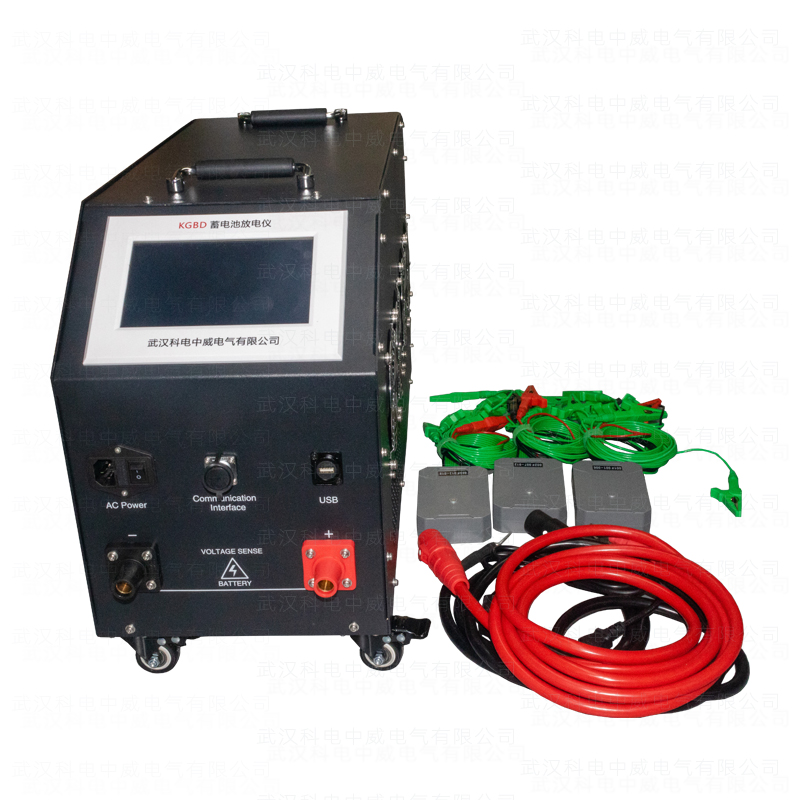
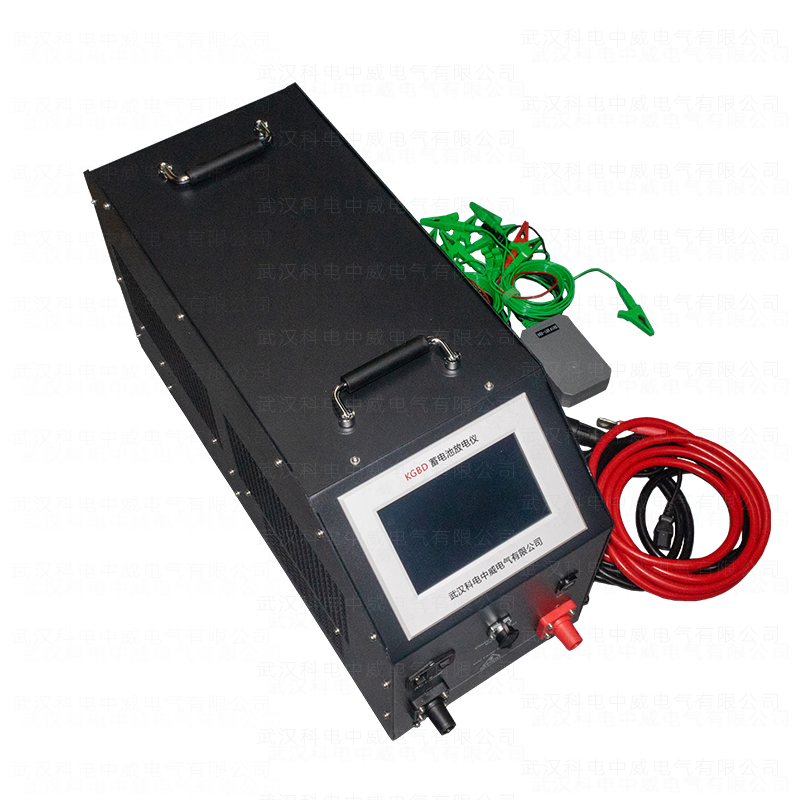
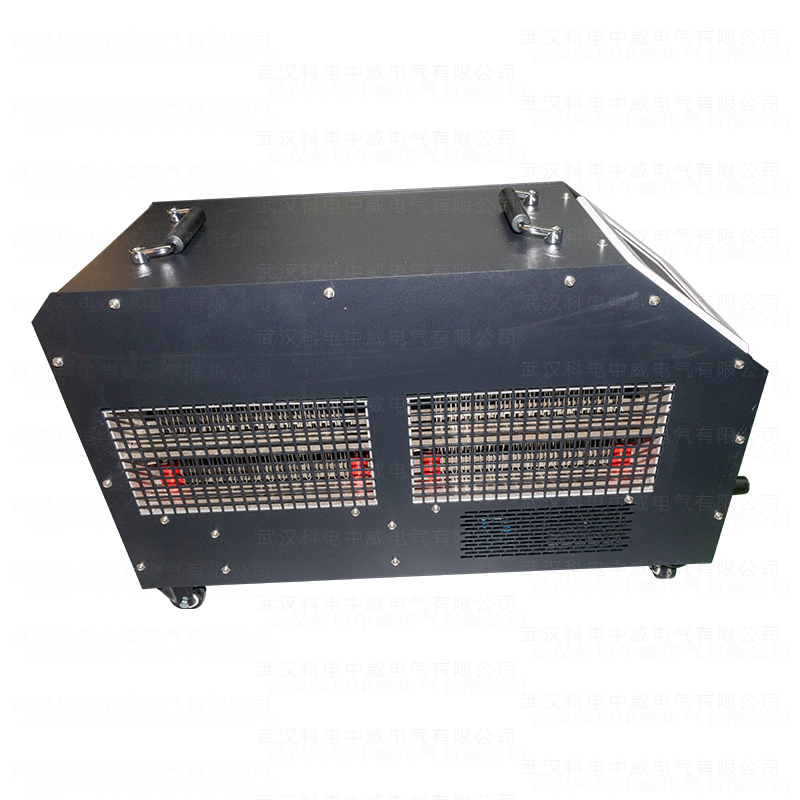
The product utilizes custom nickel-chromium alloy resistors as load sources. Low resistance values enable higher current discharge, and the customized appearance increases power density. High precision ensures accuracy within ±0.001Ω, providing a stable discharge process. Low temperature coefficient means minimal impact from temperature changes, offering strong environmental adaptability. It also features high current endurance, capable of quickly responding to large current surges, making the discharge process more reliable.
Smart chip control: The discharge process is intelligently controlled, automatically adjusting according to the battery voltage drop to ensure constant current discharge. Real-time collection of individual battery voltages is displayed in curve form for easy assessment and analysis. Simultaneously, it intelligently analyzes the battery voltage status and makes evaluations. Smart calculation of discharge capacity and conversion between discharge hours provides optimal evaluation of battery capacity status. Multiple threshold values can be set for intelligent judgment.
Discharge testing function: After disconnecting the battery pack from the system, use an intelligent dummy load for constant current or constant power discharge, or connect the intelligent dummy load with user equipment for constant current discharge. Set parameters such as discharge voltage, discharge current, discharge time, and discharge capacity thresholds, and the tester will automatically execute the discharge function, displaying real-time data including discharge current, discharged capacity, group voltage, individual cell voltage, and discharge time. Discharge parameters can be modified during the test. The discharge test stops when the battery pack reaches the preset termination voltage, discharge capacity, or time, or if any single cell voltage drops below the preset value, or upon manual intervention.
7-inch large LCD touchscreen: Features a 7-inch high-brightness touch screen with a resolution of 1024x600, allowing direct operation on the screen for simple and clear interaction. Strong anti-interference capability.
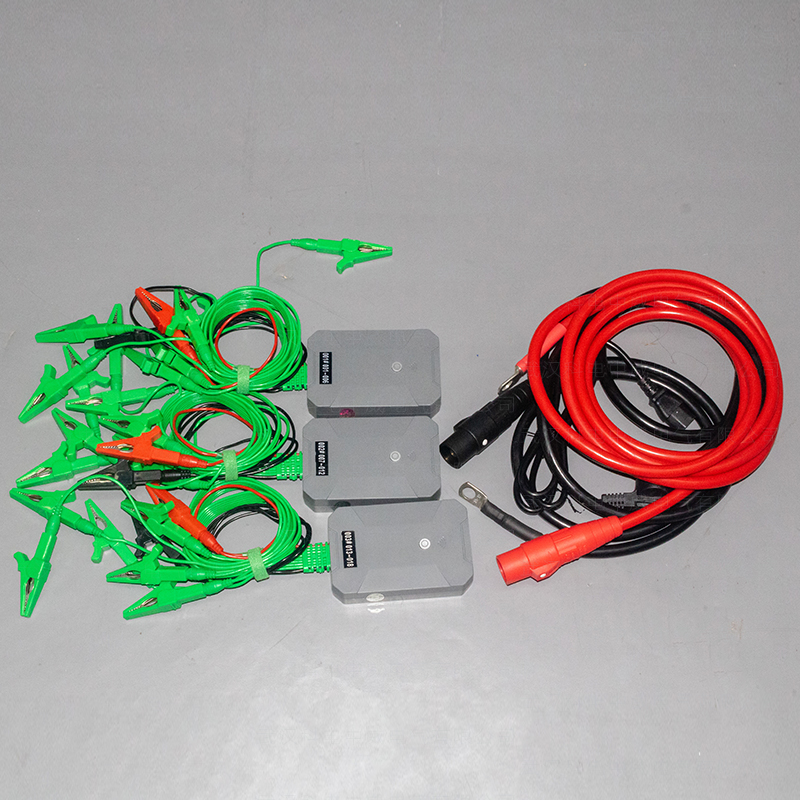
Optional LORA wireless single-cell monitoring module: Compatible with 2V/4V/6V/12V single-cell voltage monitoring. Each wireless monitoring module can simultaneously monitor 6 cells, reducing the number of required modules by 1/6 compared to monitoring one cell per module (only 4 modules needed for 48V), simplifying wiring operations.
Single-cell module frequency band settings: The host supports receiving and modifying multi-frequency band wireless single-cell monitoring modules, preventing interference when multiple testers are used in the same room or nearby areas. Supports reception of 1-10 frequency bands.
Real-time detection and display of individual cell voltages during discharge: Displays changes in individual cell voltages on the host screen via bar charts, supports data table display, and highlights the highest and lowest voltage cells to help quickly analyze trends.
Discharge curve review: Review battery pack voltage and current curves during the discharge process.
Built-in multiple discharge templates: The instrument includes 6 sets of test templates for selection, making testing more convenient. Users can modify and call these templates.
Data transfer: The host is equipped with a USB flash drive for data transfer. Data analysis software can parse the data and support report generation. Test data can be modified on the host for easier management and identification.
Multiple discharge modes: The host supports constant current discharge, constant power discharge, and constant voltage discharge, providing various testing modes for better battery performance assessment.
Master-slave mode parallel testing: Supports multiple hosts working together in parallel (optional, requires master-slave communication lines).
Power failure continuation feature: By default, the host supports resuming tests after a power failure. If power is restored, the host will continue the test from where it left off, ensuring uninterrupted data collection.
Internal resistance testing: The host supports testing the internal resistance of each single cell and allows modification of coefficients, providing reference internal resistance values (requires a wireless single-cell monitoring module).
Online monitoring: The host supports online monitoring functions. When enabled, an "Online Monitoring" option appears on the main interface, allowing real-time monitoring and recording of battery pack voltage, current, capacity, and time data, generating reports for assessing battery health (optional, requires single-cell modules and current clamps).
Reserved RS485 host interface: For battery core voltage collection (expansion function, not enabled by default).
Reserved RS485 slave interface: For remote control (expansion function, not enabled by default).