![Core Functions of the Relay Protection Tester]()
26 Mar-2026
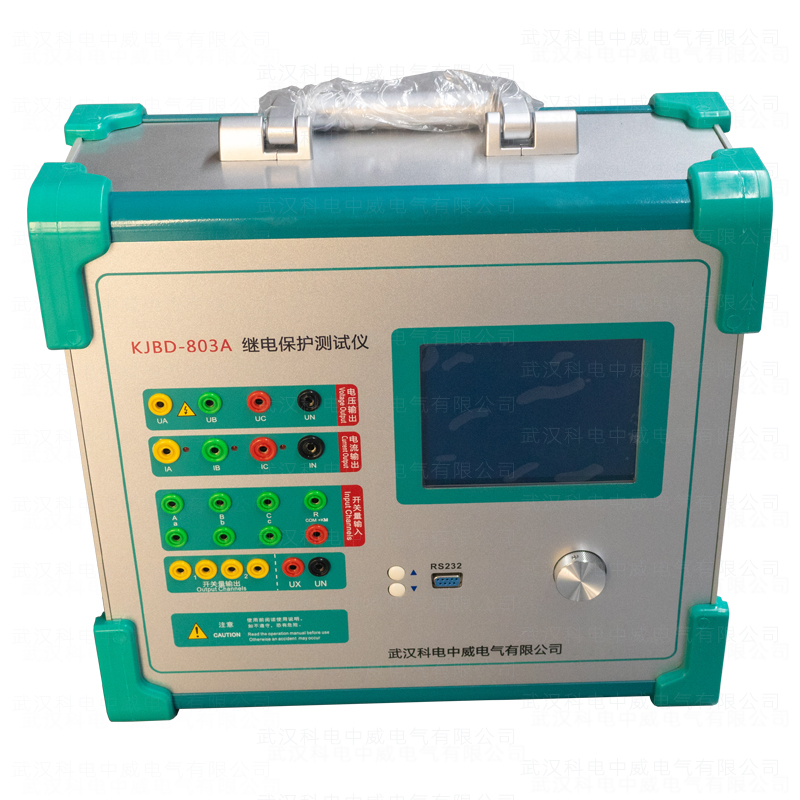
The relay protection tester is a core equipment in the operation, maintenance, inspection and testing of power systems. It is mainly used for function verification, performance calibration and fault simulation of relay protection devices, secondary circuits and automation systems, so as to ensure the safe and stable operation of the power system. Its core functions are developed around four dimensions: device calibration, fault simulation, data testing and operation & maintenance assistance, as detailed below:
I. Core Calibration Function for Relay Protection DevicesThis is the fundamental core function of the equipment, covering full-item testing of various relay protection devices to ensure accurate and reliable operation of the devices.
Full-item Calibration of Conventional Protection DevicesIt can test parameters such as operating value, reset value, operating time and operating characteristic curve of conventional devices including overcurrent protection, overvoltage protection, differential protection, zero-sequence protection, distance protection, gas protection and temperature protection. For example, by simulating an overcurrent fault, it can accurately measure the starting current and operating time limit of the protection device to verify compliance with the setting requirements.
Special Testing of Microprocessor-based Protection DevicesIt supports setting calibration, logic function testing and operation reliability verification of microprocessor-based devices such as line protection, transformer protection, busbar protection and generator protection. It can import protection settings in batches, automatically execute the test process and generate comparison reports, quickly judging whether the device matches the setting scheme.
Secondary Circuit Interlocking TestIt can simulate the interlocking process between protection devices and circuit breakers, disconnectors and measurement & control devices, test the integrity of tripping, closing, signal feedback and blocking logic, verify the correctness of secondary circuit wiring and the reliability of signal transmission, and prevent maloperation or refusal of protection caused by circuit faults.
 II. Diversified Fault Simulation and Scene Reproduction
Accurately simulating various faults of the power system and reproducing on-site abnormal scenarios is the core practical function of the tester and a key means for fault troubleshooting.
Electrical Quantity Fault SimulationIt can simulate typical short-circuit faults such as single-phase grounding, two-phase short-circuit, three-phase short-circuit and two-phase grounding short-circuit, as well as abnormal operating states such as disconnection, overload, voltage abnormality and frequency deviation. It supports customizing fault type, fault phase, fault moment, fault duration and fault current/voltage amplitude, adapting to testing requirements of different voltage levels (10kV, 35kV, 110kV, 220kV, etc.).
Non-electrical Quantity Fault SimulationFor equipment such as transformers and generators, it can simulate non-electrical faults including light gas/heavy gas faults of gas protection, over-temperature, abnormal oil level and excessive vibration, verifying the operating sensitivity and accuracy of non-electrical protection devices.
Complex Fault and Dynamic Scene SimulationIt supports superposition of multiple faults, gradual fault change and fault sequence simulation (e.g., short-circuit followed by overload, fault followed by recovery). It can also simulate dynamic fault scenarios such as power system oscillation, reclosing failure and system splitting, comprehensively testing the operating logic of protection devices under complex working conditions.
III. Automatic Testing and Data Management FunctionsRelying on digital and intelligent technologies, it improves testing efficiency and result reliability, adapting to the standardized and information-based management needs of the power industry.
Construction of Automatic Test ProcessIt supports customizing test items, test sequences and judgment criteria, and can execute automatic test tasks in batches without full manual intervention. For example, by setting a continuous test process of "overcurrent protection → zero-sequence protection → differential protection", the tester automatically completes parameter input, fault simulation, data acquisition and result judgment, greatly shortening the test time.
Accurate Data Acquisition and AnalysisBuilt with a high-precision sampling module, it can collect real-time data such as operating current, voltage, operating time and reset coefficient of the protection device, with a measurement accuracy up to Class 0.1 (meeting the first-class accuracy requirements of power tests). It also supports real-time data curve drawing and comparative analysis, intuitively displaying the operating characteristics of the protection device and quickly locating deviation points.
Test Report GenerationAfter testing, a standardized test report is automatically generated (including test time, equipment information, test items, measured data, qualification judgment, setting parameters, etc.).
IV. Auxiliary Operation & Maintenance and Safety Assurance FunctionsIt extends services to the full-life-cycle operation and maintenance of power equipment, reduces test risks and improves equipment operation and maintenance levels.
Secondary Circuit Wiring DetectionIt can test the correctness, continuity and insulation of wiring between protection devices and secondary circuits, troubleshoot problems such as wiring errors, loose connections and short circuits, and prevent maloperation of protection devices or test failures caused by wiring faults.
Auxiliary Insulation and Withstand Voltage TestingSome high-end testers integrate insulation resistance testing and withstand voltage testing functions, which can simultaneously complete the insulation performance detection of protection devices and secondary circuits, evaluate the insulation aging degree of equipment, and prevent insulation fault risks in advance.
Safety Protection and Fault-tolerant DesignIt is equipped with overcurrent, overvoltage and overload protection functions, automatically avoiding equipment damage risks during testing. It has a built-in anti-misoperation logic to prevent power system safety accidents caused by human operational errors.